Oct 24, 2008

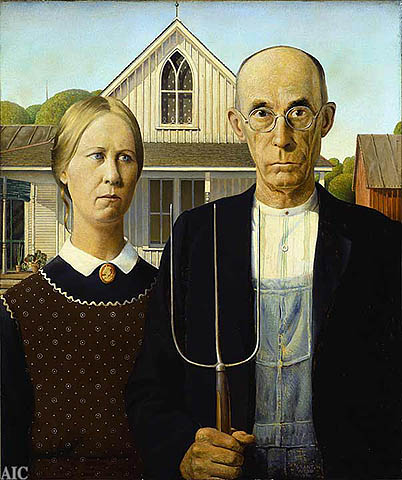
The Winter's Tale


Students in the class had this to say about the issue:


As in previous issues this term, y
ou filled the issue with good content.

The main problem with this issue was that your lead story is supposed to be about giving the finger to corporate America, but the cover gives the finger to the theatre department at HSU and all the hard-working, well-meaning students who put on the Winter's Tale. But more about that later.

There was also a problem with story organization which manifested in the Measure T story. It began this way:


David Cobb, campaign director of Democracy Unlimited, says three fourths of 2008 Humboldt County candidates have pledged not to accept donations from businesses who have corporate interests from outside the county.
That makes the reader think the story is about Cobb, when the story is about Measure T. This gives me an opportunity to bring up my Paris Hilton rule. When Paris Hilton sneezes that's news. So you can put her in your lede. If someone does not have the same name recognition, leave the name for the second paragraph.

So ask yourself:

What is this story about?: How some local political candidates will abide by a controversial referendum even though the courts say Arcata can't enforce it.


Once you take Cobb out of the lede, the rest of the story flows fine.

Great job on the University Center story

Here you took complicated story and explained it step by step. You took what could be a tedious tale and topped it with a nice hook.
Hey you! Your student fees may be in danger of falling into the hands of President Rollin Richmond's new enterprise, and it could happen before you know it.

To improve thi
s tight story, you just needed to break up some long paragraphs.
And make sure you don't bury important information. You waited until the end of the second column to tell readers that there will be a vote on it in the next month.

Remember: There is no "I" in "story"

You put yourself in the lede of the story on the rally against police brutality. When you use the word "I" you tell readers that the story is about you not t
hem. Instead, change the "I to "you".

Signs reading "Set Your Tasers to Love" and "Cops, we don't need you" littered the ground as Verbena, Cop Watch's unofficial spokesperson and found, tried to press pamphlets and literature into my hands.

Instead:

Signs read "Set Your Tasers to Love" and "Cops, we don't need you" litter the ground as Verbena, Cop Watch's unofficial spokesperson and founder, tries to press pamphlets and literature into your hands.
But in this story, too, you buried important information:

The events scheduled for Oct. 22 and 23 to mark the anniversary of the death of Christopher Burgess.

You buried the lede in the Greenhouse Boardshop and NPR stories:

I found the Greenhouse lede at the top of the third column:
When the economy's down the surf is still up.

And the NPR lede hid at the top of the second column:
Geology senior Bobby Jean Freeman lives a TV-free life. She gets her news the old-fashioned way: By public radio.


In the football story it was the story you buried.

Here is the quote from the middle of the fourth column:

"They took out the receiver! But from an offensive standpoint we gave Central Washington great field positions..."

Meanwhile on the jump we learn that the Jacks had refused to be brought down by the attenti
on surrounding CW's star quarterback, Mike Reilly; that in practices, Reilly became the motivational tool to get the players to train harder.

You buried the story in the article about the Westwood Market as well.

I found it at the top of the second column when I learned that there is the possibility that Murphy's will close the market for a short time, renovate it and reopen it as a Murphy's. That information turns a downer story the Times-Standard already did, into a story that gives residents reason to hope.

But great online map. Next time see if you can find the space inside the paper for the map. Readers LOVE maps.

Excellent editorial.

Regardless of whom you chose to endorse, you gave your readers clear reasons to back your endorsement.

Great opinion section overall.

When the paper receives numerous, well-written, well thought out columns, it means that serious people see the Lumberjack as a forum for serious discourse. It means that everyone on the staff has been doing their job.


Ground your reader

You needed to do that in the Measure T story when you mention the Pacific Legal Foundation but you fail to explain who or what that is. Then you mention O&M Industries, Mercer Fraser Corp. and Maxxam Corp. without explain who they are.


In the vollleyball story the reader who fails to read the headline doesn't know what sport the story is about; you don't use the word "volleyball" until the second column.

You also tell readers that no other sport has the frequency of scoring, but you don't explain. Better yet, show, us the action don't tell us about it.

And you quote coach Woodstra as describing it as a "game within a game." and saying that the women needed to adjust quicker to the other team's adjustment. It sounds fascinating. But you need to explain that and show it.

Nice job too on the Meat Free story

You took an event (World Vegetarian Awareness Month) and focused the story around people and why they choose to not eat meat. It had a good lede and a nice kicker.

But make your passive verbs active:

Not: Bennett has been a vegetarian on and off...
Instead: Bennett swore off meat two years ago. But throughout her life she went through vegetarian phases.

Not: It was created by the North American Vegetarian Society...
Instead: The North American Vegetarian Society created World Vegetarian Day...

Not: Adrienne Spitzer has been a vegetarian for 2 1/2 years.
Instead: Adrienne Spitzer became a vegetarian 2 1/2 years ago
So this was another terrific issue. The only big problem with it, and this was a BIG problem was the cover. You can't put a review on the front cover. You especially tease a hard review with a soft cover. That's what you did. You presented a soft, beautiful photo which leads your readers (which include the cast of the Winter's Tale and all their friends, family, neighbors and instructors) to think that inside they will find a nice, puffy feature on it. Instead you give them this in the first graph:

Without Sparknotes, the play's unconvincing acting didn't make nearly foreign words any easier to comprehend.
You sucker punched them. As journalist's you do want to be tough. You need to be honest at all times. But you don't have to be mean. Be tough in your reviews, by all means. But don't boast about it on the front cover.

And this was a student production. We're not talking about big name Broadway stars earning inflated salaries. We are talking about students just starting out.

This was a great example of how you need to anticipate all ramifications when you use art, or when you decide where and how to place stories in your issue. There are reasons you promote some stories and reasons why you bury others. These are conscious decisions you need to make, even on the fly, even when your deadline is tight and your options bad.


Oct 21, 2008

Humboldt Rollers

Good issue, lousy cover. The headline took a great story idea -- bruiser chicks -- and made it boring. This story wasn't about a roller derby team competing for charity. It was about a bunch of babes who get inside a roller rink and pummel each other for points. Don't overstate or overhype, but don't downplay the fascinating.

Great job on the debate.

It was the most professional city council debate I've seen. You presented good questions and paced them just right. You drew a decent crowd and received the respect of each candidate. Great teamwork and organization.

The story you published on the debate, well that wa
s another story. You presented good information, but you did so in the wrong format. You tried to write the story in a linear fashion, but that dulled it down.

A better approach: Break out each issue and then summarize the various
positions. There was quite a bit of agreement among candidates. By breaking out each issue with a visible subhead, you would give your readers multiple entry points into the story. You would lure more people into the story this way. Better yet, you could lay the story out as a chart with the different issues as rows and the candidates positions in the columns.


Don't dull down your story

The mud snail story was an interesting subject and you gave it a good headline. But you dulled
it down:

First,
leave attributions out of the lede. You can attribute the information in the second paragraph

Second
, shorten your paragraphs.

Third, kill repetitions. You wrote: Fish and Wildlife Service fish and wildlife biologist Greg Goldsmith.

Fourth
, make your sentence active.

You wrote
: It is believed to be the first North Coast sighting since the snails were discovered in North America in 1987.

Instead:
The snails first appeared in North American in 1987 but stayed clear of the North Coast until now.

Las
t, don't bury your lede. I found it smack in the middle of the story. The Wildlife Service wants the public to clean boats off to minimize the snail spread. So here is your lede: Hey you with the kayak! Clean off your boat when you finish paddling around. Otherwise you will aid and abet a snail invasion.

Map your stories on Google Maps


The story about the Oaxaca exchange begged for a map. Help your readers visualize the place you talk about. You can embed the map onto the site (see your editor), print it in the paper or link your readers to
the map you saved on Google MyMaps.

Don't forget the real people!


The Oaxaca story also begged for a student who expects to go on the trip.

Help your readers get involved!

Box information that lets them know how they can participate or how they can help. The most interesting tidbit of information in the story was that Susan Cooper collected 12 digital cameras as donations off Craig's List. You never know when some crazy rich person might pick up the Lumberjack or stumble on your story on the Web whip out a checkbook. You can literally change people's lives in that manner: Your story can act as the liaison between the have's and the have nots and between those who can solve the problems for the people who have the problems.

Give your readers info they can use even on the lightest story. You needed to tell readers, for example, how and where they could get the new Womama CD.

Ground your readers

The story about how HSU faculty won't discuss the subject of racism, you didn't first establish in the story that there is racism at Humboldt State. You can't expect your readers of this story
to have read the last story you did on it. You needed to include at least one par
agraph that refers readers to the last story and reestablishes that the Lumberjack interviewed numerous students who said they felt harrassed and discriminated against on campus.

You made the same mistake with the editorial. You say students are subjected to racial prejudice but no where in this issue did you show that.

Use your electronic media to give readers deeper coverage

One problem is that you fail to make adequate use of your Website. In the story and editorial you could have referred readers to the former story. On the Website you should have tagged a link to the last story onto the bottom of the new story.

When doing ongoing coverage, make readers aware that the latest story is part of a series. Box all the headlines for the linked stories with the date and a short summary. It will tell readers you are on the ball.

But when boxing your info be careful

The print inside the info box on the council candidates was too small to read. Even as you remember the blind reader you forget the ones with poor eyesight.


Good story on PowerVote

This election will be historic; you want to take every opportunity to remind readers to vote and help them do that.

But once again you wrote the story...

sdrawkcaB

The PowerVote folks gathered 700 signatures from people who pledged to take clean energy issues into account when casting their ballots. That's a lot of signatures to gather on this campus, but you buried the info in the middle of the jump. Also buried was the info that the organizers get course credit for doing that, which I think might be a story in itself. That means that a public university is giving course credit for political campaigning.

And don't forget that the delete key is your friend.

I put a slash mark through one full paragraph and half of a second paragraph. After you write each paragraph try deleting it and see if it makes any difference. If it doesn't don't put it back in.

You dissed that poor delete key on the slackline story as well. It was a nice story, but it didn't warrant the jump.


Did I tell you to not bury your ledes?


That's what you did in the soccer story. I found it in the first paragraph of the jump:

For much of Friday night, Cal Poly Pomona kept the soccer ball close to their goal. But with just under 10 minutes left, Lumberjacks freshman Karen Pontoni took a pass from sophomore Danielle Drucker and put it into the net. The 2-1 win was the women's first since Sept. 21 against San Francisco State.

You also buried your lede on the KSLG story. I found it at the end of the second column when I discovered that she joined the station at age 16.


Focus your stories

The story on KSLG/Monica Topping would be a good story if it were about one or the other. But it read as if you couldn't decide which to profile. The result is that the reader doesn't get enough of either. When readers want news as tapas, they go to the briefs page. When they start to read a feature they expect a full entree.


Great job on the roller derby story!

  • You showed instead of told
  • Beautiful lede.
  • Nice kicker.
  • You filled story with action
  • You introduced us to real people.
  • You gave us the news angle (charity event) but didn't make the story about that.
At the risk of my being the final evidence that the End of Days approaches, I have nothing bad to say about that story!

Oct 13, 2008

The Garamendi Issue

Nice job

You produced an issue filled with timely, informative stories. The stories start with strong ledes and the writing in general is tight. In some of the stories you reached far for relevant comparisons that helped give your stories context. In the high housing costs story you called to Chico State to show that students here pay higher costs than do students in a similarly rural town. And in the story about voting on campus, you called to Sacramento State to determine that a school that is four times as big has no on-campus poll site. The stories on football, Ill Bill and Bucky Walters were also good.

My criticisms are getting more and more nitpicky which is good.


Source your information and careful how you label

The snapshot on page two of the accident that occurred after the homecoming game was good. But you title it "Minor accident" eve
n though the woman injured her leg and had to be taken to the hospital. She might not think the accident so minor. Also source your information. What if the person who told it to you got it wrong and she wasn't injured? Also you need to explain to your reader why you aren't giving them the woman's name. Did the police withhold it? If so, say so.

Tell readers just what they need to know.

It was good to preview the KRFH/Lumberjack debate, but really how much did the reader need to know before the event? The story did not warrant a jump.

Bring you
r reader along with you to events

When the Lt. Governor offers to meet with students tell the reader how many bothered to show up. It won't ruin your story to say that only a handful showed up.

Don't bury the parts of the story most relevant to your core readers

In the Garamendi story, you waited until the second column his commen
ts that unless students make their voices heard, they will continue to see the price of education rise each year.

Don't ask stupid questions

You end the Garamendi interview asking him whether he will make education a priority. You already said that he has spent his entire political career making education a priority. How do you think he will answer the question?

Don't make your readers do the math


In the High housing costs story you say a three-bedroom house rents for $1,744 in Arcata, $1,376 in Eureka and $1,482 in McKinleyville. But what's the price difference?

And don't miss out on opportunities for art

A photo of a sample rental house from each town with the rent would be great.

Don't forget the info boxes

The disaster preparedness story was good but it needed a shopping list telling readers exactly what to put into the kit and where they could get each item.

Look for better ledes inside each story.

In the Ill Bill story I found the lede on the top of the last column. When you listen to an Ill Bill recording don't expect a consistent sound from track to track.

Kill your adverbs

Words like extremely are rarely necessary.

Think about story organization

You wrote the Ill Bill story backwards. The most interesting information was buried in the jump.

Tighten you writing

You write: Grow houses are another problem that Arcata faces, which decreases the amount of available housing.
Instead: Grow houses also decrease the amount of available housing.

Finally, you know this wouldn't be a Lumberjack Critique if I didn't nag you about passive verbs!
  • Compounding the frustration and anxiety for police offficers California Lt. Governor...
  • HSU is the 14th campus he has visited.
  • ...as both are elected separately.
  • Garamendi said students should rally.


Oct 4, 2008

We Surrender!


Never! (That's just the headline of the issue)

You delivered your readers another good issue. The result: Increased readership. Last year it took 10 months before the Lumberjack Website broke 20,000 page views for a month. You did it in your first full month. You can see in the chart below that after losing your readers over the summer, you quickly regained the ground this past month. In theory, if we can repeat our growth rate this year, we could end in May 2009 with some 40,000 page hits a month.
Earlier this term, I griped that the second issue of the year was fluffy. You came back
with a hard hitting third issue. I whined that in the last issue you failed to show rather than tell. You came back with stories filled with vivid descriptions. This is by far the strongest and most talented Lumberjack staff I've seen. You seem to eat up my criticisms and spit them back at me. Last week I spotted four good stories. This time I found six, plus the editorial: The Metro, the Garamendi preview, the student vote , the parking problem story, the Arcata theater and the football article. On top of that the weather in the calendar section was great!

So what what made the good stories good?


1. Ledes:


The white flag was up. With "Last Chance to Score" scrawled across teh front windows facing the Arcata Plaza, the Metro closed its doors for good on Saturday, Sept. 27.

(You didn't need both the Saturday and the date and would be stronger if it ended this way: ...closed its doors for good Saturday. Or: ....closed its doors for good Sept. 27.)

Political Science student Elise Gerhart said parking at her old school was also difficult, but it was free.

Lara Cox sits surrounded by the beginnings of her "new baby," the partially-renovated historic Arcata Theater.

Lt. Governor John Garamendi canceled his visit to HSU last October due to the Southern California wildfires, but promised to reschedule the meetings. He will fulfill his vow on Friday by spending an hour with students talking about something that directly affects them -- higher education.
2. Strong Sourcing.

Interesting people with interesting perspectives filled these stories, providing juicy quotes.

"I needed to remodel the store to better accommodate body piercing, but had nothing left to invest, no m ore capital to spend, and when it got down to it, no more energy left to give," Noggle said. "I knew in my heart I was done."

"I try to get here at 8, 8:15 at the latest. Otherwise I have to park over by the high school," she said.

"What worked Saturday night was our passing attack," he said. "I hope to see more of the same attitude and energy, but at the same time cut down on crucial mistakes."

3. Powerful sentences


But when Noggle's insurance would no longer cover in-store shows, an essential part of cultivating interest in the community, everything took a nose dive.


Now before you start jumping for joy...

I did spo
t problems.

The story about the purchase of the industr
ial building was a mess. It was disorganized. It suffered from inconsistent use of tense (he said, he explains, Dean Davenport says.)

It missed the story: Buried in the last paragraph before the jump the reader learns that Plant Ops will move into the newly purchased building. That begs
the question, what will go into Plant Ops? With a severe shortage of classroom and office space on this campus that's that one thing that will interest your readers the most.

Several stories began with quote ledes and I have never read a quote lede that worked. If you like the quote so much, take off the quote marks, paraphrase and cite the so
urce. See:

When the government recruits young people to fight in Iraq, the government harvests our most precious resource. That's how Arcata City Councilman Dave Meserve sees it. "We believe it is the community's right to protect its youth," he says.

Even within stories you included dull quotes. Instead, paraphrase. As writers, you can probably say things better. Consider...
WASC concluded these processes are "complicated and favor the current ways of operation over strategic priorities."
Instead...
WASC noted that complicated systems for budgeting and decision-making make it difficult to bring about needed change.


So when someone says "Blah, Blah, Blah," ask yourself: What the heck are they really saying? Then take the quote marks off, paraphrase and just say it.

Don't make your readers read between the lines.


That was the problem with the Breakdown of Trust, the article about the hiring of Keeling and Associates. Here the story reads as if it is a perfectly normal thing to bring this consulting agency in to solve some communications problems. But a reader who reads between the lines says Whoa! $65,000 for a marriage counselor?

Here you failed to question the answers to
the questions you asked: When someone says communications problem, you need to ask -- What do you mean exactly by "communication problem? Do you mean that the faculty and the administration aren't talking to each other?" Because if that is the problem, then the fact that the two groups are engaging in what is arguably infantile behavior is costing the school the equivalent of one full-time professor, or about $8 per student.

This is a story you could have had fun with by going over to the Department of Communications and finding a tenured professor willin
g to give the university advice for free on how to solve the communications problems. And you could have had fun with the graphics for it to. Perhaps two elementary school style report cards to show that the administration and faculty don't play well with each other.

You also made your readers read between the lines in the story about not so free speech. Here you presented a fascinating thing: That on this university campus, you
can only exercise your First Amendment right of free expression at lunch Mondays thru Fridays. But instead of focusing on the limitation (the school blocks free expression 163 out of 168 hours a week) the article focused on the rational as expressed freely by Steven Butler.

You failed to question the answers to the questions you asked. One big rationale was that some free
speech would disrupt classes. But the school allows very loud music during lunch on the quad even though classes are held at that hour next door in Siemen's Hall.


This story suffered from skewed balance. It is the job of a reporter to try to see things from all perspectives, to sort out hard evidence from opinion and falsehoods and then weigh it all against common sense. Don't ignore your gut instincts. If something smells wrong even though official sources tell you it is right don't let the official version override your common sense or sense of basic right and wrong. As long as you put forth the versions that counter your own so that ultimately the readers can make up their own minds you do your job.

Don't present an abnormal situation as normal or an outrageous situation as acceptible. Readers will think someone sold
you a load of hooey or that you are trying to mislead them. That's no way to build credibility.


This story also suffered from insufficient sourcing. It begged for a constitutional rights expert and someone who advocates for First Amendment expression. There are a number of groups who do that from the California First Amendment Coalition to the ACLU.

Be Specific

The question and answe
r interview with Melissa Ruth suffered from vagueness. Again, question the answers to the questions you ask. You asked her where she gets her inspiration from. She said the songs start with a kernal of an idea. So you should then ask: Can you give me an example? Or what was the inspiration for the song Bonafide?

Get art

Musicians are hungry for publicity. Most have photos online. Get their permission to use the photos from their MySpace page or get them to email you a digital shot of themselves.

Consider flipping your story

I don't know why, but many writers write backwards. On your second draft try flipping the story -- make your ending your lede and your lede your end and see if it works. That was the main problem with th
e story on the Arcata Theater, which was a good story regardless. At the end of the piece we find that community interest is high because it has been closed for so long. Then just before that is a discussion of why it has been closed for so long -- permit problems and funding.


Email me!

at mib3@humboldt.edu

Marcy's Top Ten Rules

1. Use active verbs.
2. Don't be afraid to paraphrase.
3. Question the answers to the questions you ask.
4. Substance always adds to style.
5. Honesty overrides all other journalistic rules.
6. Accuracy is not the same as truth.
7. Getting two sides to a story is not the same as balance.
8. Show don't tell.
9. Write with all five senses.
10. Give voice to the voiceless.

Movies about newspaper reporters

  • Futureworld
  • Salvador
  • The Return of Doctor X
  • Missing
  • All the Presidents Men
  • Scoop
  • The Quiet American
  • Foreign Correspondent
  • Gentleman's Agreement
  • Under Fire
  • The Parallax View
  • The Mean Season
  • Defense of the Realm
  • Superman 1-7
  • The Front Page
  • His Girl Friday
  • The Year of Living Dangerously
  • The Killing Fields
  • Inherit the Wind
  • True Crime
  • The Paper
  • Deadline-USA
  • Call Northside 777